
Why Leather and Lasers Are a Perfect Match
Leather goods feel personal, and a laser lets you add that personal touch without expensive tooling. Whether you make a slim card holder for a friend or a run of wallets for a wedding party, engraving names, dates, and artwork onto vegetable-tanned leather gives a result that looks boutique. For makers, leather is a high-value material that turns a small laser session into a sellable, premium product.
The CO2 beam burns a controlled mark into the hide, so every piece is identical and repeatable. You can preview the design on screen, engrave it, and move on, with no stamps to carve or foil to register. If you already cut wood or acrylic, leather is a natural next material that pairs beautifully with those crafts in gift sets and bundled products.
Choosing Leather That Engraves Cleanly
Vegetable-tanned leather is the clear winner for laser work because it is natural, untreated, and engraves to a rich contrast without releasing nasty fumes. It is sold by weight, commonly 1.5–3 mm thick for wallets and card holders, and it takes dye and finish well after marking. Chrome-tanned and heavily finished garment leathers can off-gas and may not mark cleanly, so read the label before buying.
A medium temper around 2 mm is ideal for slim card holders, while 2.5–3 mm suits a more structured wallet. Lighter natural tan shows engraving as a dark, coffee-brown burn that reads clearly, whereas dyed black leather shows a lighter scorched mark that can be subtler. Always buy a small offcut to test, because moisture content and finish vary between tanneries and even between batches.
A buying checklist for your first leather project:
- Type: vegetable-tanned, natural finish, no heavy coating.
- Thickness: 1.5–2 mm for card holders, 2.5–3 mm for wallets.
- Temper: medium, so it folds without cracking.
- Source: a trusted leather supplier with consistent hides.
Settings for Crisp Monograms and Art
Start with a raster engrave at 300–600 DPI. On a 40–60 W CO2 laser, 100–250 mm/s at 25–45% power gives a clean, dark mark on 2 mm vegetable-tanned leather. Thinner leather marks faster, so reduce power slightly to avoid cutting through. The aim is an even burn with readable detail, not a deep gouge that weakens the hide.
Apply a single layer of masking tape over the engrave area before cutting to catch soot and keep the surrounding leather clean. After the job, peel the tape and wipe with a dry cloth. If the mark is too light, raise power 3–5% or lower speed 20 mm/s; if it is too dark or starts to char the edges, ease off power and keep airflow strong.
Troubleshooting leather engraving:
- Faint mark: raise power 3–5% or slow the head by 20 mm/s.
- Scorched edges: lower power and keep the air assist on high.
- Soot stains: mask with tape and clean gently after peeling.
- Uneven burn: confirm the hide lies flat and the lens is clean.
Cutting, Stitching, and Assembly
A CO2 laser can also cut thin leather, which lets you cut wallet panels and card slots from a single file. For 2 mm vegetable-tanned leather, try 250–400 mm/s at 30–50% power with one or two passes; thicker 3 mm stock needs slower speeds or an extra pass. Cutting your own panels means every piece matches, and you avoid the waste of die-cut shapes.
After cutting, the classic maker finish is saddle stitching by hand, which outlasts machine stitching and looks intentional. Punch holes along the seam with a pricking iron, then stitch with waxed thread for a tidy, durable edge. Fold the panels, burnish the edges with a little gum tragacanth, and your laser-cut, laser-engraved wallet is ready. The engraving and the cut are done by the same machine, which keeps the workflow tight.
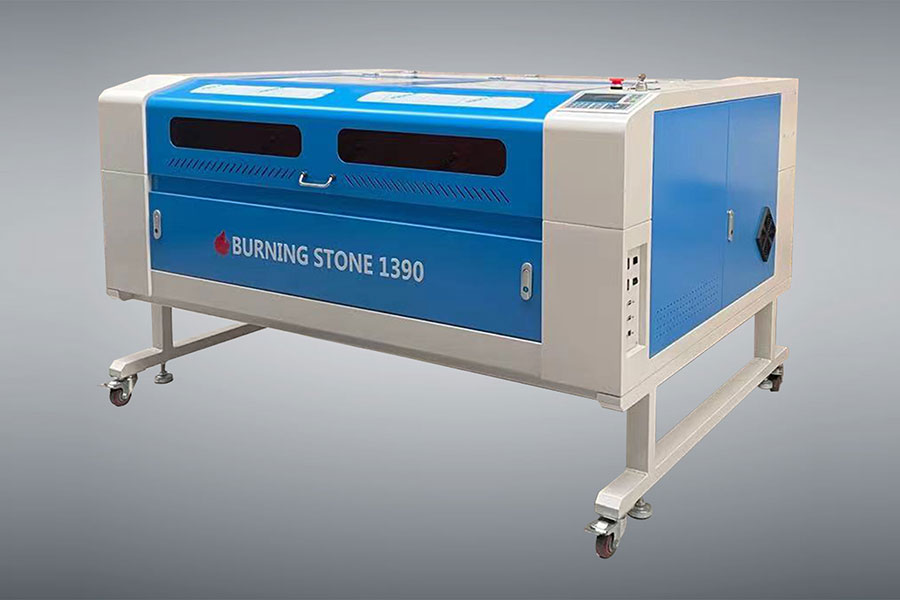
If you want to produce panels faster, a flatbed CO2 laser cutter with a larger bed lets you nest several wallet patterns on one hide, reducing scrap and speeding up batch orders for events and markets.
Design Ideas Buyers Love
Personalization drives leather sales. A monogram on a card holder, a wedding date on a wallet, or a pet name on a key fob turns a generic item into a keepsake. Line art such as mountains, constellations, and botanical sprigs engraves cleanly and photographs well for listings. Keep fonts at least 4 mm tall and avoid ultra-thin scripts that burn away on textured grain.
Consider themed sets that bundle materials you already make. A leather card holder paired with a laser-cut wooden valet tray, or a wallet with an engraved metal tag, makes a higher-value gift. For events, matching groomsmen wallets with individual initials sell as a cohesive set. The more you repeat a motif across products, the stronger your maker brand becomes.
Care, Selling, and Finishing
Finish protects your work. After engraving, apply a leather conditioner or a light coat of resolene to seal the surface and enrich the burn. Dye the edges if you want a polished look, and let everything cure overnight before shipping. Conditioned leather resists moisture and keeps the engraving crisp through years of use, which is exactly what buyers expect from a handmade good.
Sell where the story matters: maker markets, gift shops, and online platforms that value craft. Photograph the engraving close-up and include a shot of the item in use, because the tactile quality of leather does not always show in a flat scan. A small card explaining it was made on a CO2 laser adds provenance and justifies a premium price for the personalization.
Common Leather Engraving Mistakes to Avoid
Even experienced makers slip on a few leather habits that cost time and materials. The first is skipping the test scrap, which leads to a burn that is too dark or a mark that vanishes on a darker dye; a ten-second test on the offcut prevents a ruined wallet. The second is forgetting to mask the surface, so soot stains the surrounding grain and needs careful cleaning afterward. Transfer tape is cheap insurance against a messy finish, and it peels away in seconds once the job is done.
Another mistake is cutting too fast on thick leather and ending with a partially separated panel that tears when handled. Slow down or add a pass rather than forcing one aggressive cut, because a clean through-cut matters more than saving thirty seconds. Finishing before the engraving has fully cooled can also trap heat and blur the mark, so let the piece rest before conditioning or dyeing the edges.
Keep a small journal of leather type, thickness, and the setting that worked, because hides vary from batch to batch even within one tannery. Over time that journal becomes your fastest path to a perfect first cut, and it lets you quote custom work with confidence. A little discipline up front keeps every leather make looking like the premium product your buyers expect and return for again.
FAQ
What kind of leather should I avoid in a laser?
Avoid chrome-tanned and heavily coated or painted leathers, which can release unpleasant fumes and may not mark cleanly. Stick to vegetable-tanned, natural-finish hides for safe, predictable engraving with good contrast.
Can a CO2 laser cut leather, or only engrave it?
It can do both. Thin vegetable-tanned leather around 2 mm cuts in one or two passes at moderate power, while thicker stock needs slower speeds. Always test a scrap first, since moisture and finish change how it reacts.
How do I keep the leather around the engraving clean?
Mask the area with a layer of transfer tape before the job, then peel and wipe after. Strong air assist and a clean lens also reduce soot, and a light finish seals the mark so it stays sharp.
Start Personalizing Leather Today
Leather is a high-value material that makes your laser time count, and a monogrammed card holder is an easy first win. Choose good vegetable-tanned hide, lock in a clean setting, and build a small range before taking custom orders. If you later outgrow a desktop bed, HF Laser builds larger flatbed and auto-feeding CO2 machines that scale with your business.

- National hotline: +86-531-86516855/56/57
- Enterprise mailbox:sales@redsaillaser.com
- Address: Room 402E, Tower D, Yinhe Building, 2008 Xinluo Avenue, Shunhua Road Subdistrict, Jinan Area, China (Shandong) Pilot Free Trade Zone


Redsail Tech Co. © 2002-2026. All Rights Reserved.