
The Spare Room Is A Legitimate Production Space
You do not need a workshop unit to sell laser-made products. Thousands of makers run profitable personalisation businesses from a spare bedroom, a garage corner or a garden shed, because the customers buying a personalised cutting board or a set of acrylic charms care about the finished object, not the square footage behind it. What they do care about is reliability: that the item looks like the photo, arrives on time and survives being handled.
That reliability is a system, not luck. Set up the space properly, pick a small product range you can produce repeatably, price with real numbers and build an order workflow that does not depend on remembering things. Do those four things and the machine stops being an expensive hobby and starts behaving like a small manufacturing cell.
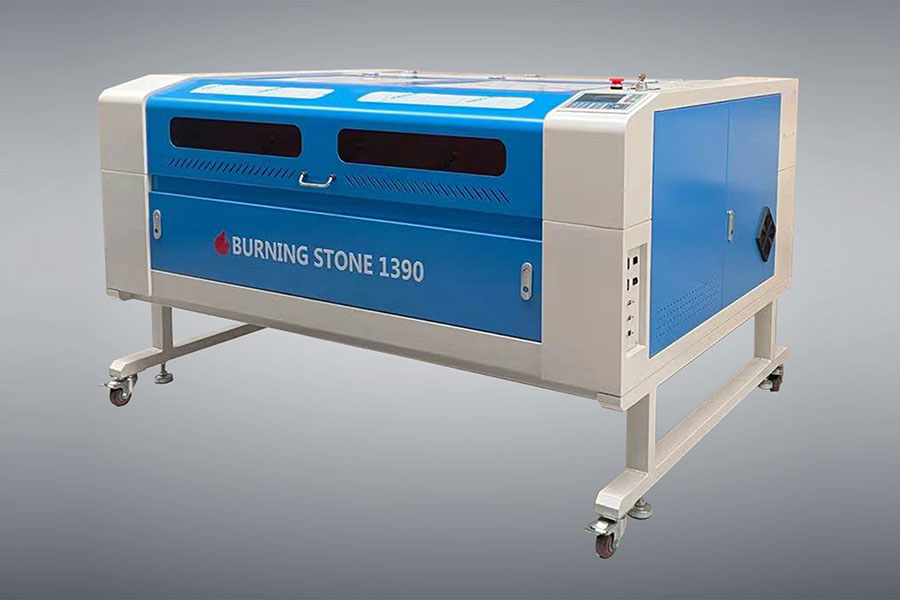
Set Up The Room Before You Sell Anything
Space and safety come first, because a complaint about smoke or a fire scare ends the business faster than any pricing mistake. Ventilation is the single most important investment; cutting wood, leather and acrylic produces smoke and fine particulates that you should never be breathing.
A workable home setup checklist:
- Ducted extraction to the outside, or a multi-stage filtration unit rated for laser fume
- A non-flammable work surface and clearance around the machine on all sides
- A fire extinguisher rated for electrical and Class A fires within arm's reach
- Dedicated power circuit where possible, with no overloaded extension leads
- Water cooling maintained properly, with spare coolant and a leak check routine
- Material storage that keeps plywood flat and acrylic away from direct sunlight
- A packing bench separate from the machine, so shipping supplies stay dust-free
- A logged settings library taped to the wall near the machine
Noise and odour are the two things that cause friction with neighbours and family. Ducted extraction solves most of the smell; an inline fan mounted outside the room or on rubber isolators cuts most of the hum. Schedule heavy cutting during daytime hours and keep a simple log of maintenance and jobs so you can spot problems before they become downtime.
Choose A Product Line You Can Repeat
New makers often try to sell everything and end up efficient at nothing. The fastest route to steady orders is a narrow range with shared inputs — the same materials, the same jigs and the same finishing steps across several products.
Strong home-workshop categories:
- Personalised kitchen goods: cutting boards, serving trays, coasters in wood and slate
- Pet products: ID tags in anodized aluminium, portrait plaques, bowl mats
- Acrylic goods: keychains, bag tags, cake toppers, ornaments
- Paper and stationery: wedding invitations, place cards, gift tags
- Leather small goods: key fobs, luggage tags, card holders, monogrammed patches
- Wooden puzzles and toys: name puzzles, stackers, ornaments
Pick two or three and build real depth: tested settings, a jig for each, standard packaging and a photo template. That depth is what lets you quote confidently and fulfil a twenty-piece order without drama.
Design files deserve the same discipline. Name every file with product, material and settings version, keep a folder of proven artwork templates, and save customer-approved proofs with the order number. Ten minutes of file hygiene per week prevents the single most expensive mistake in personalisation: shipping the wrong spelling.
Price With Real Numbers, Not Guesswork
Underpricing is the most common reason home laser businesses stall. Material cost is visible and easy to count; the invisible costs are file setup, masking, cleanup, packing, photography, listing fees and the inevitable remake when something goes wrong.
A simple pricing framework:
- Calculate landed blank cost including shipping and the scrap rate from failed pieces
- Measure real cycle time on a batch, including prep and cleanup, not just machine runtime
- Set an hourly rate for your own labour that you would accept from an employer
- Add marketplace fees, payment processing and packaging, typically 15–25% combined
- Apply a margin of 30–50% on top so the business can absorb a mistake and still grow
Then test against the market. If your calculated price is far above comparable listings, either your process is too slow or your product needs to be positioned as premium rather than discounted. Competing on price against mass-produced goods is a losing game; competing on personalisation, speed and quality is winnable.
Track three numbers monthly: average order value, labour minutes per order, and remake rate. Those three tell you more about your business health than total revenue, and improving any one of them lifts profit immediately.
Listings, Photos And The Order Workflow
Online, the photograph is the product. Buyers decide in under two seconds whether to click, so shoot in diffused daylight, use a plain background, include a scale reference, and show the item in use wherever possible. A cutting board photographed with bread on it outsells the same board photographed on a bench.
Listing essentials:
- Title with the product type, material and personalisation angle up front
- At least five images: hero shot, detail, scale, in-context and packaging
- Clear options for personalisation fields, with an explicit note that you use the text exactly as entered
- Honest processing time and shipping estimates, stated twice — once in the listing and once in the order confirmation
- A short care note, because it reduces returns and reads as expertise
Behind the listings, build a repeatable workflow. A simple board or spreadsheet with columns for received, proof sent, approved, in production, packed and shipped keeps orders from being forgotten. Send a proof for anything with custom text, and never start cutting before approval — a five-minute proof step eliminates the vast majority of expensive mistakes.
When volume grows, batch by material rather than by order date. Cutting all the acrylic on Monday, all the wood on Tuesday and all the anodized tags on Wednesday reduces material changeovers, jig swaps and cleanup cycles, which is where most of the hidden time actually goes.
Know When To Step Up To Bigger Equipment
The signal to upgrade is not ambition; it is a pattern. When you are routinely turning down orders because of bed size, running the machine past what a healthy schedule allows, or spending more time on changeovers than on cutting, the economics have shifted and a larger machine will pay for itself.
- Bed size limits: repeated requests for items larger than your working area
- Duty cycle: the machine running continuously for hours with no cool-down margin
- Repeat large orders: the same design produced hundreds of times, where a flatbed with more power cuts cycle time dramatically
- Material thickness: customers asking for items you cannot cut cleanly at your current power
- Throughput maths: when a faster, larger machine saves more labour hours per month than it costs
Before committing, price the whole move: space, extraction, power, delivery and the learning curve on new software and settings. Many successful home businesses take the step by keeping the small machine for prototypes and personalised one-offs while adding a larger flatbed for volume work.
FAQ
Q: How much room and ventilation do I really need at home?
Enough to place the machine with clearance on all sides, plus ducted extraction or a properly rated filtration system that removes laser fume rather than recirculating it. Vent straight to outside where you can. Add a suitable fire extinguisher, keep flammables away from the work area, and never leave a cutting job unattended, even a short one.
Q: What should I sell first to get reviews quickly?
Start with personalised items that use cheap blanks and short cycle times — acrylic keychains, leather key fobs, slate coasters and pet tags. They are low-risk to produce, easy to photograph, and buyers of personalised goods leave detailed reviews, which builds the trust that larger kitchen and homeware orders depend on.
Q: How do I handle custom text mistakes without losing money?
Send a digital proof before cutting and require approval, spell-check against the customer's exact input, and make your listing state that you reproduce entered text verbatim. Keep a small remake budget in your pricing so the occasional error is absorbed rather than argued about. Most disputes come from unclear expectations, not bad work.
Put A System Around Your Machine
Choose one product, build a jig for it, write down the tested settings, calculate a real price and list it this week. The jump from hobby to business is not a bigger machine — it is repeatability you can trust on a busy evening. When volume and order size start pushing against your current bed size and duty cycle, compare formats in the Redsail Laser cutter range before you turn down the next order.
For larger-format production work, see the HF Laser cutter range.

- National hotline: +86-531-86516855/56/57
- Enterprise mailbox:sales@redsaillaser.com
- Address: Room 402E, Tower D, Yinhe Building, 2008 Xinluo Avenue, Shunhua Road Subdistrict, Jinan Area, China (Shandong) Pilot Free Trade Zone


Redsail Tech Co. © 2002-2026. All Rights Reserved.